


Premium Boat Bottom Paint Services in Cape Coral & SWFL
Get top-tier anti-fouling protection in Cape Coral, Fort Myers, Sanibel, Captiva, Pine Island, Estero, Bonita Springs, Marco Island, Naples, and the surrounding Lee & Collier County areas.
Why Choose Us for Bottom Paint?
- Locally trusted expertise with over 43+ years in business providing marine coatings across Southwest Florida and coastal waterways.
- Licensed & insured for safety and satisfaction.
Our Paint Brands & Types
Pettit Trinidad Pro – Hard Anti-Fouling Paint
- Highest copper load (65%) for maximum defense against barnacles and marine growth, available in Blue, Black, Red or Green.
- Ideal for boats that stay in water long-term—whether docked or cruised
- Tough finish resists abrasion—great for scrubbed or beached hulls
Pettit Odyssey – Ablative Bottom Paint
- Slowly wears to constantly reveal fresh biocide—excellent for trailered boats, boats kept on Boat lifts or those with high activity.
- Minimal build-up and smooth maintenance—great between haul-outs.
Our Services Include:
- Haul-out, blocking and launch at our Pine Island Location.
- Professional surface prep – pressure wash, sanding, prep & solvent cleaning.
- Barrier coat primer application when needed (especially on older or blister-prone hulls).
- Top-quality bottom paint with 2 coats of Trinidad Pro or Odyssey.
- Prime and Prep the running gear.
- Zincs Changing out of Sacrificial zincs.
Bottom Paint Gallery
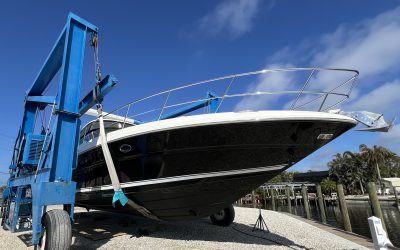
44′ Sea Ray Sundancer, Bottom Paint Trinidad Pro 1088 Black
44' Sea Ray Sundancer, Bottom Painted With Trinidad Pro 1088 BlackBottom Paint Refresh for a 44' Sea Ray Sundancer – Trinidad Pro 1088 Black Another...
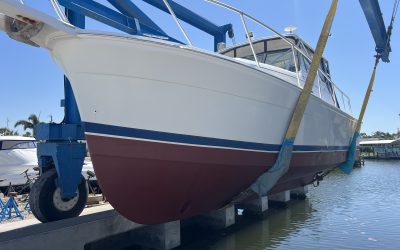
30′ Mainship Pilot Trinidad Pro 1086 Red Bottom Paint
30' Mainship Pilot, Bottom Painted With Trinidad Pro 1086 RedFresh Bottom Paint for a 30' Mainship Pilot – Trinidad Pro 1086 Red At Bob and Annie’s...
What Is a Bottom Painting?
Boat bottom painting is a vital maintenance task that enhances vessel performance, protects the hull, and extends the boat’s service life. It involves using specialized antifouling paints designed to deter marine growth, reduce drag, and resist corrosion, ensuring that boats remain efficient and in good condition despite the harsh marine environment.
Why is bottom painting necessary?
Preventing Marine Growth
- Biofouling Prevention: Marine organisms such as barnacles, algae, and mollusks can attach to the boat’s hull. These organisms not only add weight but also create rough surfaces that increase drag, reducing the boat’s speed and fuel efficiency.
- Specialized Ingredients: Antifouling paints typically contain biocides—substances like copper compounds or other biocidal agents—that deter these organisms from settling on the hull.
Reducing Friction and Drag
- Improved Hydrodynamics: A smooth hull is essential for optimal performance. By preventing fouling, bottom painting helps maintain a sleek surface which reduces friction in the water.
- Fuel Efficiency: With less drag, boats can operate more efficiently, leading to savings in fuel consumption and improved overall performance.
Protecting the Hull Material
- Corrosion Protection: The protective coating also serves as a barrier against saltwater and other corrosive elements, which can degrade materials over time.
- Extended Lifespan: By shielding the hull from direct contact with potentially damaging substances, bottom painting contributes to the longevity of the boat’s structure.
Types of Antifouling Coatings
- Ablative or Erodible Paints: These coatings slowly wear off over time, continuously exposing fresh layers of antifouling agents. This is often suitable for boats that are in the water for extended periods.
- Hard Coatings: These are more durable and may be preferable for boats that are used seasonally or need a more resilient layer to resist damage.
Application and Maintenance
- Preparation: Proper surface preparation is crucial before painting. This often involves cleaning the hull and removing any old or damaged paint.
- Frequency: Depending on the type of paint used, environmental conditions, and water usage, the painting may need to be repeated every season or every few years.
- Environmental Considerations: Modern antifouling paints are designed to minimize environmental impact, though there are still guidelines and regulations to ensure that biocides do not adversely affect marine ecosystems.